










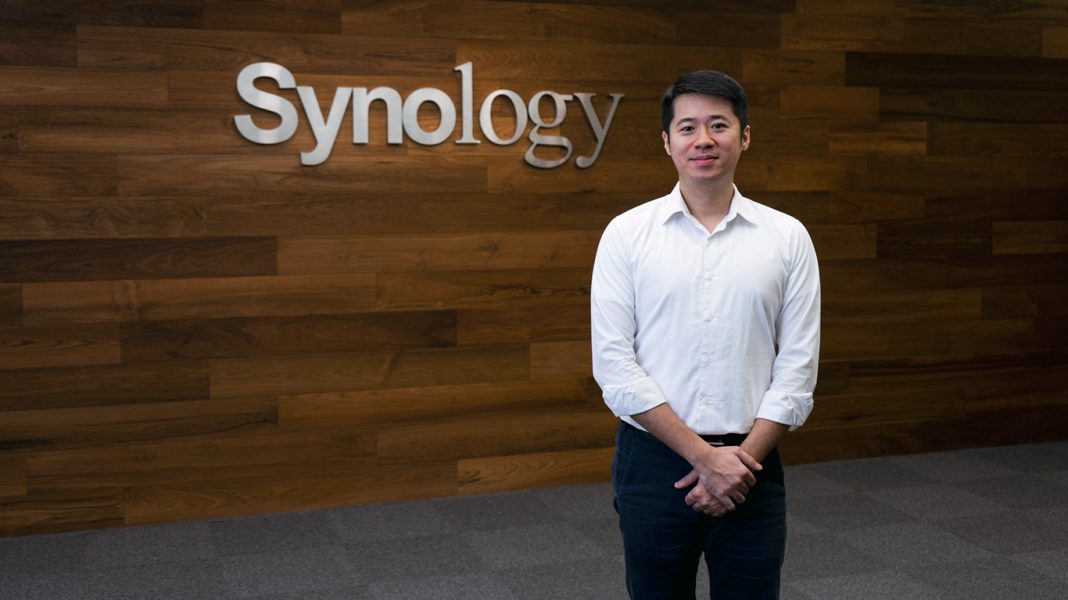
In an era dominated by cloud, Synology is doubling down on data sovereignty and integrated hardware-software excellence. We sat down with Chad Chiang to discuss the company’s approach to AI and its aggressive expansion into the European enterprise market. From local LLMs to a strategic manufacturing base in Taiwan, Chiang reveals why Synology is playing the long game.
Everyone is racing toward AI integration right now. What is the reasoning behind Synology’s AI roadmap, and is there a real upside for your products?
We are exploring opportunities, but we are not eager to be the first to market with an «AI NAS» because we are still evaluating how agentic AI will truly bring productivity to IT managers.
Our focus is on making IT management easier, but we don’t believe a fully proactive agent is the answer; instead, we are developing a semi-proactive agent with limited access. For example, while an AI agent could handle time-consuming tasks like setting up access for new employees, our 1.0 version will only have permission to search and identify data.
Our focus is on making IT management easier, but we don’t believe a fully proactive agent is the answer
We believe business users won’t trust a fully automated AI to manage the storage where all their company data lives, so human intervention will always be required for final actions like renaming or removing files. At least for the foreseeable future.
Synology has been shifting its focus from the consumer and «prosumer» segments toward the enterprise. How is that transition progressing?
We began shifting toward the business side about seven or eight years ago, and we are very happy with this direction. We realized a decade ago that the consumer market was becoming difficult to grow because streaming platforms for video and music were booming, reducing the need for personal storage. No one is storing movies or music anymore at home.
While we still invest in Synology Photos because it remains beneficial for photographers and general consumers, usage rates for our video and audio stations have dropped dramatically. To maintain our consumer base while focusing on enterprise, we launched the BeeStation, designed for users without a technical background who want simplicity without complexity. It features a local AI model that analyzes and classifies pictures and documents, to later allow a semantic search.
Regarding your global expansion, what are your specific plans for Southern Europe and Spain?
Spain has been a very strong market for us recently, particularly with government-side projects. We have a significant deal with a Spanish agency that manages real estate, which uses our storage across many of its locations and is currently looking to expand.
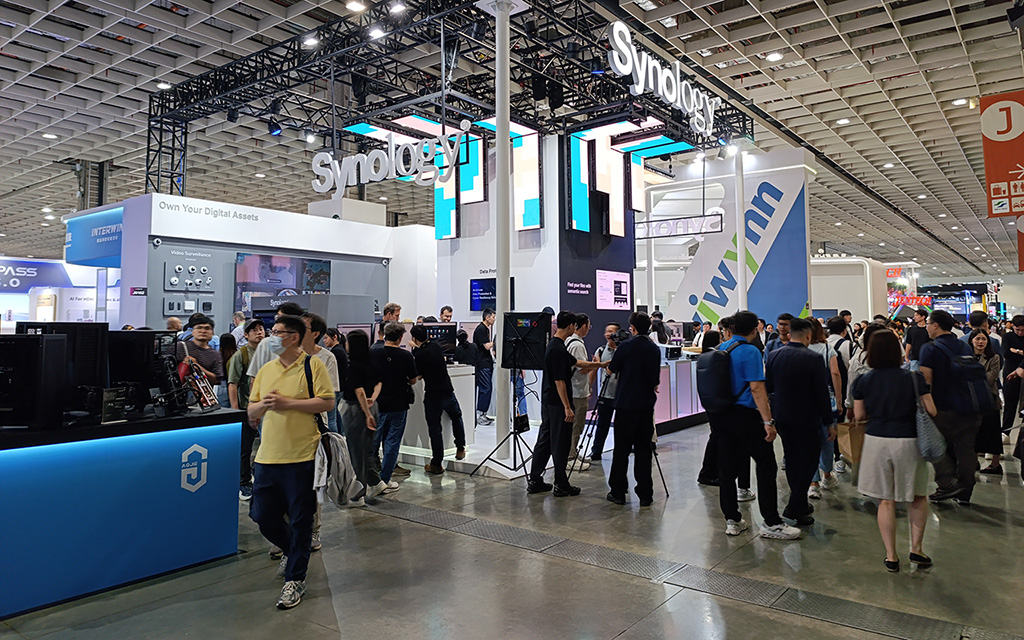
To support this growth, we are expanding our sales team in Spain and Portugal this year. Enterprise customers require face-to-face meetings and local service support, so we are strengthening our local presence to put more people on the road and to support our customers.
With the global shortage of GPUs, how are you handling the hardware requirements for your new AI-capable series?
We made a strategic move to support GPUs while letting the customers buy the GPU themselves. It is very difficult, even for a company of our size, to secure a high quantity of GPU power because the market is dominated by giants like Google, Meta, and OpenAI. Unless you are one of those players, you have to pay a massive premium, which doesn’t make sense currently for our business model.
How does Synology’s hybrid cloud strategy fit into your global enterprise outlook?
Our focus is on enterprise solutions, specifically expanding our NVMe product lines and our C2 cloud services. We don’t sell C2 as a standalone service but as part of a Synology hybrid cloud. A key feature is Hybrid Share, which allows multiple NAS units in different worldwide locations to sync data through the cloud.
Hybrid Share allows multiple NAS units in different worldwide locations to sync data through the cloud
This allows offices to see entire folder structures locally while only downloading «hot data» as needed, a system we use ourselves to share data between our headquarters in Taiwan and our offices in France, Germany, and the UK.
You’ve mentioned that all R&D and manufacturing stay in Taiwan. Why maintain that specific footprint?
Synology is primarily a software company, with 80% of our team being software engineers. While it might be cheaper to manufacture elsewhere, our owner insists on keeping everything in Taiwan to maintain a strong brand image. We are proud of our software quality and reliability because everything is built in-house. Unlike competitors who use acquisitions to gain software capabilities—which makes integration and troubleshooting harder—we offer an all-in-one solution.
In that sense, we use the same philosophy as Apple, because owning both the hardware and software makes for a much more seamless, integrated and consolidated product.
Privacy is a major concern in Europe. How does Synology approach the demand for local LLMs?
Data ownership and privacy have always been core values for us. Most businesses do not want to send their sensitive data to the cloud; they want AI sovereignty. Since many Small and Medium Businesses (SMBs) don’t have the capacity to build their own AI modules, we provide preset modules that they can train locally with their own data.
We will keep these local modules updated on a regular basis, just as we do with our standard software updates, to ensure our customers always have access to the latest technology without compromising their data.